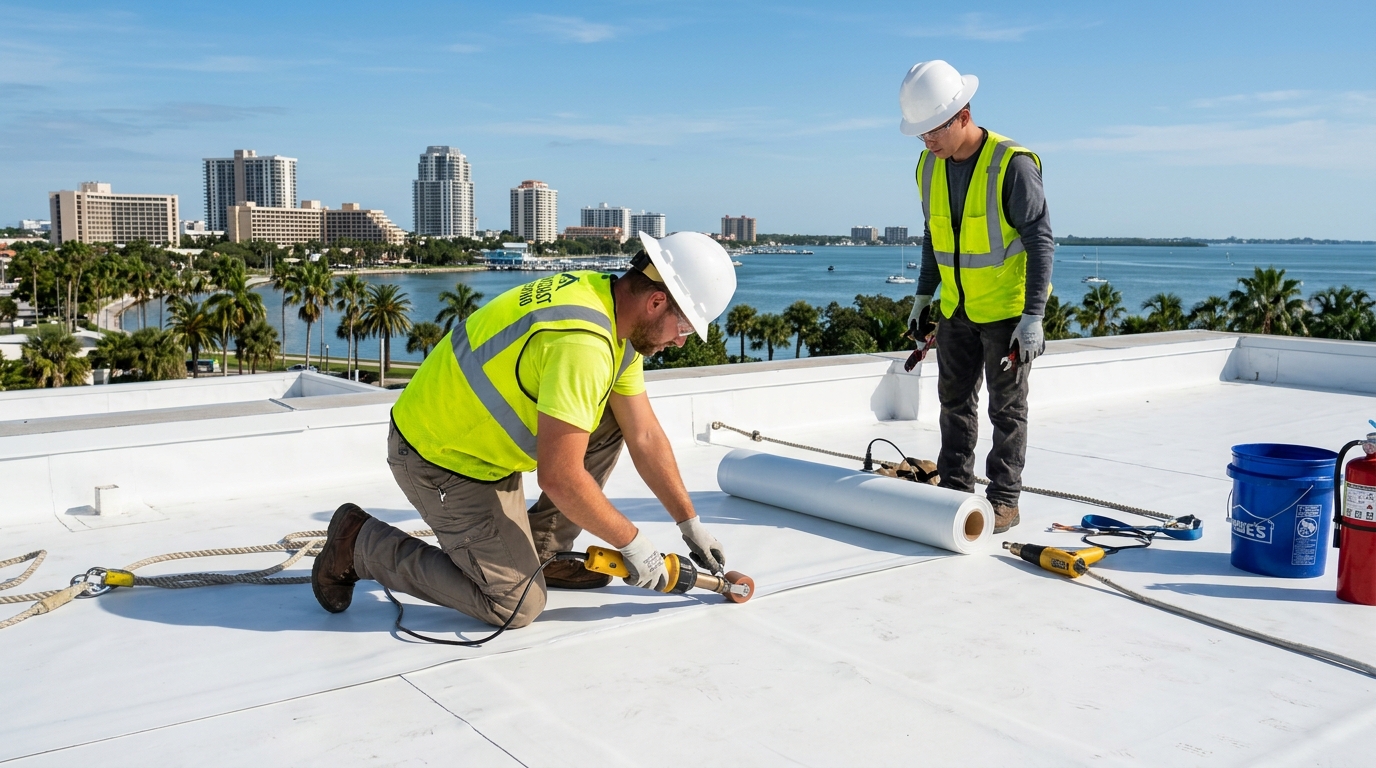
Tapered Iso-Cricketing & Robotic Seam Weld
Engineered elimination of 48-hour standing ponding basins through custom tapered polyisocyanurate insulation crickets and hot-air robotic welding on TPO and EPDM assemblies.
1. Regional Microclimate Dynamics & Severe Storm Exposure in Eastern Nebraska
Omaha's geographic position along the Missouri River valley produces severe convective atmospheric instability. Severe squall lines originating in the western plains accelerate east along the Interstate 80 and West Dodge corridors, encountering high ambient humidity along river bluffs. In Douglas and Sarpy Counties, these systems routinely trigger violent derecho winds exceeding 75 MPH, microburst downbursts, and heavy hail storms capable of inflicting catastrophic kinetic impact damage on architectural shingles.
Compounding summer convective squalls, Omaha's winter climate brings extended sub-zero cold snaps, intense blizzards, and relentless freeze-thaw cycles. When attic insulation fails to maintain thermal isolation, interior heat escapes into the roof deck, melting rooftop snow that subsequently refreezes along cold eaves and gutters into impenetrable ice dams. The resultant hydrostatic meltwater pools backward underneath shingle tabs, bypassing gravity-lapped underlayments and soaking exterior soffits, rafter tails, and interior finished drywall.
2. Non-Destructive Moisture Diagnostics & FLIR Thermal Tracing
Locating the true entry point of a storm-induced roof leak requires specialized diagnostic equipment. Water rarely penetrates directly above an interior ceiling stain; instead, it travels along roof trusses, top plates, electrical conduits, and air ducts before pooling in the lowest drywall deflection. Visual inspections alone cannot detect trapped moisture within structural cavities, leading to hidden rot and toxic mold growth if left unaddressed.
Network contractors deployed through our Omaha dispatch desk utilize calibrated FLIR infrared thermal imaging cameras to conduct non-destructive moisture mapping. By capturing minute evaporative cooling differentials between wet and dry substrate materials, infrared thermography displays real-time thermal heat maps revealing exact water intrusion pathways. Technicians confirm these thermal readings with non-invasive radio-frequency moisture meters, establishing quantifiable boundary maps of saturated wood decking and insulation without damaging sound roofing surfaces.
3. Step-by-Step Substrate Restoration & Weatherproofing Methodology
True structural resilience demands an uncompromising substrate restoration protocol. When storm damage, hail fracture, or ice dam backflow breaches the outer barrier, licensed technicians execute a rigorous 5-step restoration methodology:
Key Technical Engineering Protocols:
- ✓ Selective Surgical Teardown: Precision extraction of damaged shingle courses, fractured tiles, or punctured membranes back to sound framing joints without disturbing adjacent weathered field arrays.
- ✓ Decking Structural Remediation: Deflected or water-saturated OSB/plywood sheathing is surgically cut out along rafter centerlines and replaced with APA-rated exterior-grade CDX plywood, secured with galvanized ring-shank nails.
- ✓ High-Performance Moisture Barriers: Deployment of ASTM D1970 self-adhering polymer-modified ice and water shield membranes along eaves, valleys, rakes, and masonry penetrations to block hydrostatic pressure backflow.
- ✓ Heavy-Gauge Flashing Integration: Hand-fabricated 26-gauge galvanized steel step flashings with soldier-course soldered seams and deep-cut masonry counter-flashing reglets locked into mortar joints.
- ✓ UL 2218 Class 4 Impact Finishing: Reinstallation of Class 4 impact-resistant architectural shingles using 6-nail high-wind pneumatic patterns to ensure 130 MPH blow-off resistance.
4. Nebraska Energy Efficiency Codes & Contractor Licensing Compliance
All roofing restoration operations must strictly comply with Nebraska state statutes and municipal building codes. Under the Nebraska Contractor Registration Act (Neb. Rev. Stat. §§ 48-2101 to 48-2117), contractors must maintain an active registration certificate with the Nebraska Department of Labor, verifying active workers' compensation insurance and state unemployment tax compliance.
Furthermore, roof alterations in Omaha and surrounding jurisdictions are governed by the 2018 International Residential Code (IRC) and Nebraska Energy Code (Title 153). Repairs exceeding one roofing square (100 sq ft) require appropriate municipal building permits from the City of Omaha Planning Department or Sarpy County Building Inspections. Energy code standards mandate maintaining an effective thermal envelope with R-49 attic insulation and a minimum 1:150 balanced ventilation ratio to eliminate attic moisture buildup that drives winter ice dams.
5. Preventative Property Maintenance & Severe Storm Preparedness
Proactive envelope stewardship is the most cost-effective defense against Omaha's violent weather extremes. Property owners should schedule biannual non-destructive inspections—once in early spring prior to peak convective supercell season, and once in late autumn before sub-zero winter freeze cycles begin. Key preventative protocols include clearing all valley troughs and downspout leaders of deciduous tree debris, inspecting exposed neoprene pipe collars for ultraviolet crazing, and checking attic rafter bays for telltale water rings or condensation staining.
Following severe hail or wind alerts, avoid walking on steep or wet shingles, which damages loosened granule surfacing and creates serious slip hazards. Contact our 24/7 dispatch desk to coordinate a professional forensic evaluation by licensed local contractors equipped with drone photography, FLIR thermal imaging, and OSHA-compliant safety rigging.
Need Urgent Flat Roof Ponding Repair in Omaha or Eastern Nebraska?
Zero web forms, zero automated delays. Speak immediately with a live dispatch coordinator to mobilize vetted, licensed Nebraska roofing crews directly to your property.
CALL 24/7 DISPATCH: (888) 208-4155