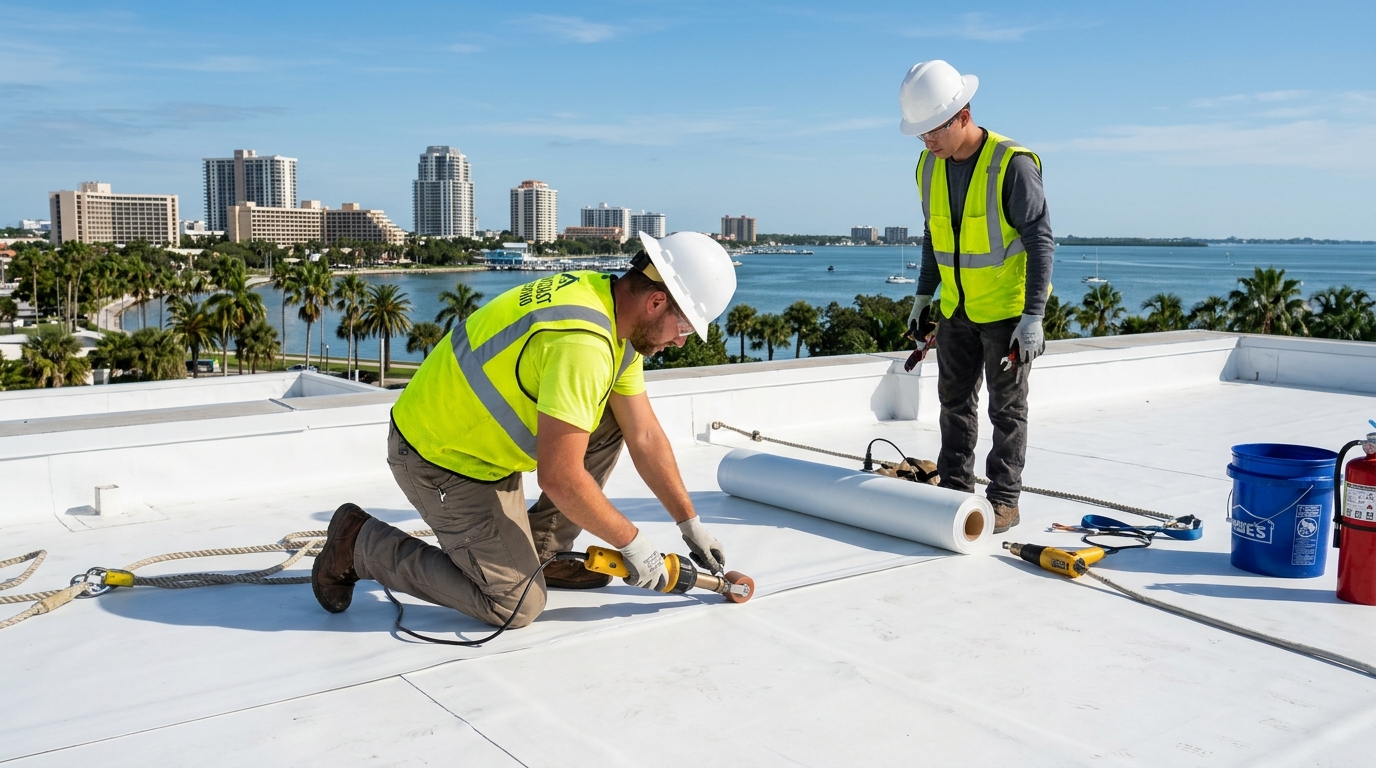
Localized Microclimate & Repair Protocols for Gretna, Nebraska
Residential construction across Gretna (Sarpy County) is characterized by distinct architectural features and environmental exposures that require specialized storm restoration techniques:
- • High-Wind Prairie Exposure: Open suburban setbacks accelerate straight-line winds, requiring 6-nail pneumatic fastening patterns on architectural shingles to prevent tab creasing and blow-off.
- • Convective Hail Alley Dynamics: Severe spring convective supercells track east across Douglas/Sarpy Counties, creating soft-point fiberglass fractures that necessitate calibrated test-square forensic evaluations.
- • Winter Ice Dam Vulnerabilities: Sub-zero freezes alternate with snow accumulation, forcing meltwater behind cold eave margins and demanding full ASTM D1970 self-adhering membrane protection.
- • Complex Valley & Flashing Junctions: Deep architectural valleys and brick chimney transitions require custom 26-gauge galvanized diverters and soldered cricket assemblies.
1. Regional Atmospheric Hazards in Gretna, NE
Gretna's geographic position within the Missouri and Platte River storm drainage corridors subjects local structures to extreme thermodynamic transitions. When dry cold fronts from the northern plains collide with warm, moisture-laden air masses from the south, severe supercell squalls develop with alarming speed. These storms generate localized wind shear velocities exceeding 75 MPH, microburst downbursts, and high-density hail swaths capable of causing immediate functional failure across residential shingle surfaces.
Additionally, the region experiences severe winter cold snaps with sustained temperatures dropping well below 0°F. Snowpack accumulating on roofs melts over warm attic centers and refreezes into massive ice dams upon reaching unheated eaves and gutters. Water trapped behind these ice barriers seeps backward under shingle laps by hydrostatic pressure, infiltrating attic spaces and causing extensive drywall staining, insulation collapse, and electrical hazards.
2. Non-Destructive Moisture Diagnostics & FLIR Thermal Tracing in Gretna
Accurately diagnosing storm damage across Gretna properties requires specialized non-destructive forensic instrumentation. Visual ground inspections routinely fail to identify subterranean water intrusion paths or internal fiberglass scrim fractures. The independent contractors in our referral network deploy calibrated FLIR infrared thermal cameras to scan roof planes, identifying evaporative cooling anomalies that signify trapped moisture beneath shingles and underlayment.
These infrared findings are verified using electronic radio-frequency moisture meters, enabling technicians to construct an exact, non-destructive moisture boundary map. For hail assessments, crews perform standardized 10ft x 10ft test-square chalking on each exposure to objectively document strike density, mat indentation, and collateral soft-metal damage on gutters, downspouts, and AC condenser fins.
3. Step-by-Step Substrate Restoration & Weatherproofing Methodology
Restoring storm-damaged roofs in Gretna requires an uncompromising architectural approach. Independent roofing contractors adhere to an engineered 5-phase envelope restoration methodology:
- Forensic Teardown: Removal of compromised shingles down to the bare wooden decking along defined rafter spans to prevent hidden rot.
- Decking Remediation: Deflected or water-saturated plywood/OSB sheathing is cut out and replaced with APA-rated exterior CDX plywood, re-fastened with ring-shank nails.
- Ice & Water Barrier Application: Installation of ASTM D1970 self-adhering polymer-modified bitumen membrane extending a minimum of 24 inches past the interior heated wall line.
- Flashing Fabrication: Custom-bent 26-gauge galvanized steel step and counter-flashing installed with soldier-soldered seams at all masonry and sidewall transitions.
- Class 4 Impact Shingle Installation: Application of high-performance architectural shingles using a 6-nail high-wind pattern engineered to withstand 130 MPH aerodynamic uplift.
4. Nebraska Energy Codes & Contractor Licensing Compliance in Sarpy County
All roofing projects executed in Gretna must strictly comply with Nebraska state laws and municipal building codes. Under the Nebraska Contractor Registration Act (Neb. Rev. Stat. §§ 48-2101 to 48-2117), contractors must maintain an active registration certificate with the Nebraska Department of Labor, verifying active workers' compensation and commercial general liability insurance.
Additionally, local building jurisdictions enforce the 2018 International Residential Code (IRC) and Nebraska Energy Code (Title 153). Re-roofing projects exceeding one roofing square (100 sq ft) require building permits from local municipal building inspection departments in Gretna or Sarpy County. Energy codes mandate maintaining balanced attic ventilation (1:150 or 1:300 ratios) and adequate thermal insulation (R-49 minimums) to protect against severe winter ice dam formation.
5. Preventative Property Maintenance & Severe Storm Preparedness in Gretna
Proactive envelope maintenance is essential to preserving the longevity of roofs in Gretna. Property owners should perform biannual ground-level visual audits each spring and autumn, checking for missing or creased shingle tabs, curled edges, and damaged pipe boots. Ensure that all gutters, downspouts, and valley channels are cleared of fallen leaves and debris to allow torrential rainwater and winter snowmelt to flow freely off the roof deck.
In the immediate aftermath of a severe hail barrage or high-wind storm in Gretna, never climb onto a damaged or wet roof surface. Contact our 24/7 dispatch desk immediately to connect with licensed local roofing contractors equipped with safety rigging, FLIR thermal imaging, and heavy-duty 10-mil poly emergency tarps.
Need Urgent Roofing Assistance in Gretna, NE?
Zero web forms, zero automated delays. Speak directly with a live dispatch intake coordinator to route vetted, licensed local roofing crews to your Gretna property.
CALL 24/7 DISPATCH: (888) 208-4155